How to Clean a Chimney Safely
Follow a safe chimney cleaning process, from protecting your home and removing creosote to checking for damage and knowing when to call a pro.




Based on 500+ Reviews

Proudly American
Owned & Operated

Cleaning a chimney safely involves removing soot, creosote, ash, and debris while protecting the fireplace, chimney components, and the surrounding area. Regular chimney cleaning helps maintain proper airflow, improve fireplace performance, and reduce problems caused by excessive buildup. For homeowners considering an alternative fireplace system, ethanol fireplace installation may also be an option depending on the home's needs and setup.
While some basic cleaning tasks can be handled by homeowners, chimney cleaning requires proper tools, safety precautions, and knowledge of chimney components. Incorrect cleaning methods can damage the flue liner, spread soot inside the home, or miss hidden problems that require attention.
Every time a fireplace is used, smoke and combustion particles travel through the chimney. Over time, these materials collect inside the flue.
Common chimney deposits include:
When buildup becomes excessive, it can affect chimney airflow and fireplace operation.
Regular cleaning helps:
The right cleaning schedule depends on:
A chimney should be cleaned when significant soot or creosote buildup is present.
Signs that cleaning may be needed include:
A chimney inspection can help determine whether cleaning is necessary.
Proper tools help make chimney cleaning safer and more effective.
| Tool | Purpose |
|---|---|
| Chimney brush | Removes soot and creosote |
| Extension rods | Reach deeper chimney areas |
| Drop cloths | Protect floors and furniture |
| Protective gloves | Protect hands |
| Safety glasses | Protect eyes from debris |
| Dust mask | Reduce exposure to soot |
| Fireplace vacuum | Remove collected debris |
The correct brush size depends on the chimney type and flue dimensions.
Using an incorrect brush can damage chimney components or fail to remove buildup properly.
Before cleaning begins, make sure the fireplace has not been used recently. A professional fireplace sweep can then safely remove soot, ash, and other buildup from the fireplace and chimney system.
A safe cleaning process requires:
Attempting to clean a warm chimney can create burn risks and make handling debris more difficult.
Chimney cleaning can release soot and debris.
Before starting:
Soot particles can spread easily, so preparation helps keep the home cleaner.
Before brushing the chimney, perform a basic visual check.
Look for:
Also check whether there are signs of a larger problem.
Cleaning does not repair:
If damage is visible, further inspection may be needed.
Remove loose ash from the fireplace before cleaning the chimney.
Use:
Avoid removing warm ashes because they may still contain heat.
Ash should be completely cool before disposal.
One cleaning method involves working upward from the fireplace opening.
The process generally includes:
The goal is to break loose deposits attached to the chimney walls.
Avoid forcing the brush aggressively because excessive pressure can damage some chimney liners.
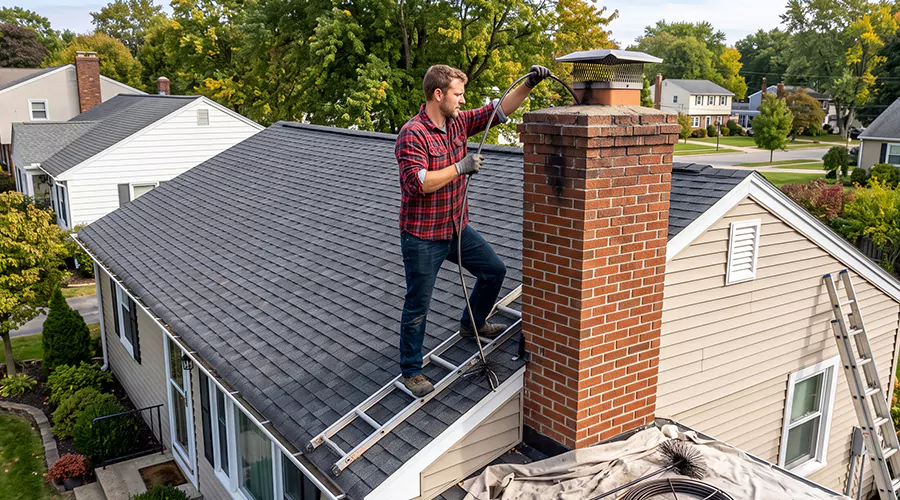
Some chimney cleaning methods involve accessing the chimney from the top.
This approach requires additional safety precautions because working on a roof can be dangerous.
Before accessing the roof:
Roof access may not be appropriate for every homeowner.
After brushing the chimney, collect the loosened material.
Debris may include:
Use appropriate cleaning equipment to remove material from the fireplace area.
Avoid using regular household vacuums because fine soot particles can damage some vacuum systems and spread dust.
After cleaning, inspect accessible areas again.
Check for:
If cracks, damaged liners, or structural problems are discovered, the chimney should be evaluated before continued use.
Safe chimney cleaning requires attention to several risks.
Wear:
Soot and creosote particles can irritate skin, eyes, and breathing passages.
Many chimney cleaning injuries occur from falls.
Avoid climbing onto the roof if:
Broken brushes or rods can become stuck inside the chimney.
Inspect tools before use.
If cleaning reveals:
cleaning alone may not solve the problem.
Some homeowners can perform basic chimney cleaning tasks, especially with simple systems and light buildup.
However, professional cleaning may be better when:
Professional chimney cleaning also provides an opportunity to identify problems that may not be visible during normal use.
Common mistakes include:
A brush that is too small may not clean effectively, while an oversized brush may damage components.
Removing buildup does not reveal every chimney problem.
Hard, glazed creosote may require specialized cleaning methods.
Allow the area to settle and confirm that no issues remain before using the fireplace.
Cleaning frequency depends on fireplace use and buildup.
Many wood-burning fireplaces require regular cleaning because they produce soot and creosote.
A chimney should also be cleaned when:
Cleaning a chimney safely requires proper preparation, the right tools, and careful attention to chimney components. The process involves removing soot, creosote, ash, and debris while protecting the fireplace and surrounding areas.
Homeowners can perform basic cleaning tasks, but complex chimneys, heavy buildup, or suspected damage may require professional evaluation.
Regular chimney cleaning helps maintain airflow, improve fireplace performance, and identify potential issues before they become larger problems.
Yes, some homeowners can clean simple chimney systems, but proper tools and safety precautions are necessary.
The frequency depends on fireplace use, fuel type, and buildup levels. Many wood-burning fireplaces require regular cleaning.
Chimney cleaning removes soot, creosote, ash, and debris from the chimney interior.
Cleaning can improve airflow when buildup is the cause, but draft problems may also result from other issues.
Cleaning can involve risks such as soot exposure, falling hazards, and incorrect tool use. Safety precautions are important.
Yes. Checking the chimney condition before cleaning helps identify damage that may require repair.
Follow a safe chimney cleaning process, from protecting your home and removing creosote to checking for damage and knowing when to call a pro.
